

A dream setup from the 90s
In the latest video on the AudioPilz channel, we follow the dream project of rebuilding a full 1990s dance music production setup using only gear released before the year 2000. It's a nostalgic yet practical walk through a time when home studios were just beginning to rival professional facilities, and when syncing devices required more than a USB cable.
The video takes us piece by piece through a full production chain: synths, sequencer, drum machine, mixer, effects, and recorders. All of them are vintage, temperamental, and authentic to the era.
Synths from the golden age
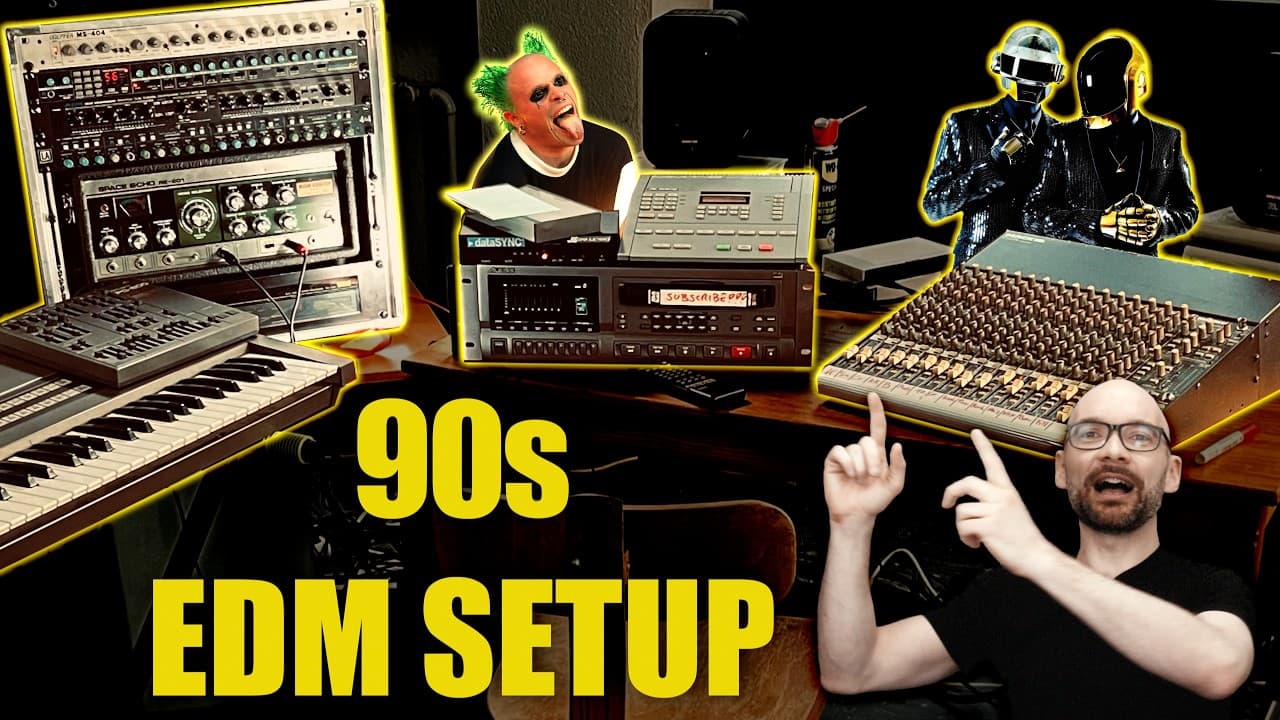
The synth lineup includes the Novation Bass Station Rack (1995), a dual-DCO analog classic that found favor with Underworld, and the Doepfer MS-404 (1994), a fast-LFO monosynth that foreshadowed the Eurorack revolution.
Also featured is the Roland JV-1080 (1994), the ROMpler that defined the polished end of '90s sound design with its multi-timbral capabilities and deep menu architecture.
The Roland JX-8P (1985), while older, was a common sight in '90s studios thanks to its affordability and warm tone.
Drum machines and sequencing
Drums are handled by the Jomox AirBase 99 (1999), a beast of a rack unit channeling TR-808 and 909 energy through a sci-fi filter. Sequencing duties fall to the Alesis MMT-8 (1987), a hardware MIDI sequencer that found fame with Daft Punk and Orbital.
Unlike modern step sequencing, the MMT-8 requires real-time MIDI recording, done here using the JX-8P's keyboard.
Mixers and FX units
The Mackie CR-1604 VLZ (1996) acts as the mixing hub. This board helped bring decent-quality mixing to the home studio, and was notably used by Liam Howlett of The Prodigy and The Chemical Brothers.
Effects include a quirky Korg MultiFX unit (1987) with remote control, the iconic Roland Space Echo RE-201, and the Alesis 3630 compressor, infamous for its gritty sidechain pumping and favored by early Daft Punk.
Recording to tape, not timelines
For audio capture, AudioPilz uses a Fostex D-10 DAT recorder (1993), and an Alesis ADAT XT (1996) for multi-track recording. Syncing all of this gear requires the JLC dataSYNC2 (1997), which converts ADAT sync to MIDI clock, cabled together using joystick connectors, no less.
As AudioPilz notes, your favorite 90s dance music track might just be a DAWless jam played in real time, and this setup proves that’s still possible. Even if the workflows are arcane by today's standards, they reveal a tactile and disciplined approach to production.