


Pocket operator video synth squeezes visuals into your back pocket

Pocket operator goes visual
Teenage Engineering’s #PO10DIY contest invited makers to re‑imagine the pocket‑sized synth family for its tenth birthday, offering a full PO line‑up to the most inventive entry. Among the hundreds of hacks that poured in – from “synthitars” to fossil‑inspired cases – Ramona (RMNA) quietly stole hearts with a working video synthesizer that fits the familiar credit‑card footprint, even if it didn’t take home a prize.
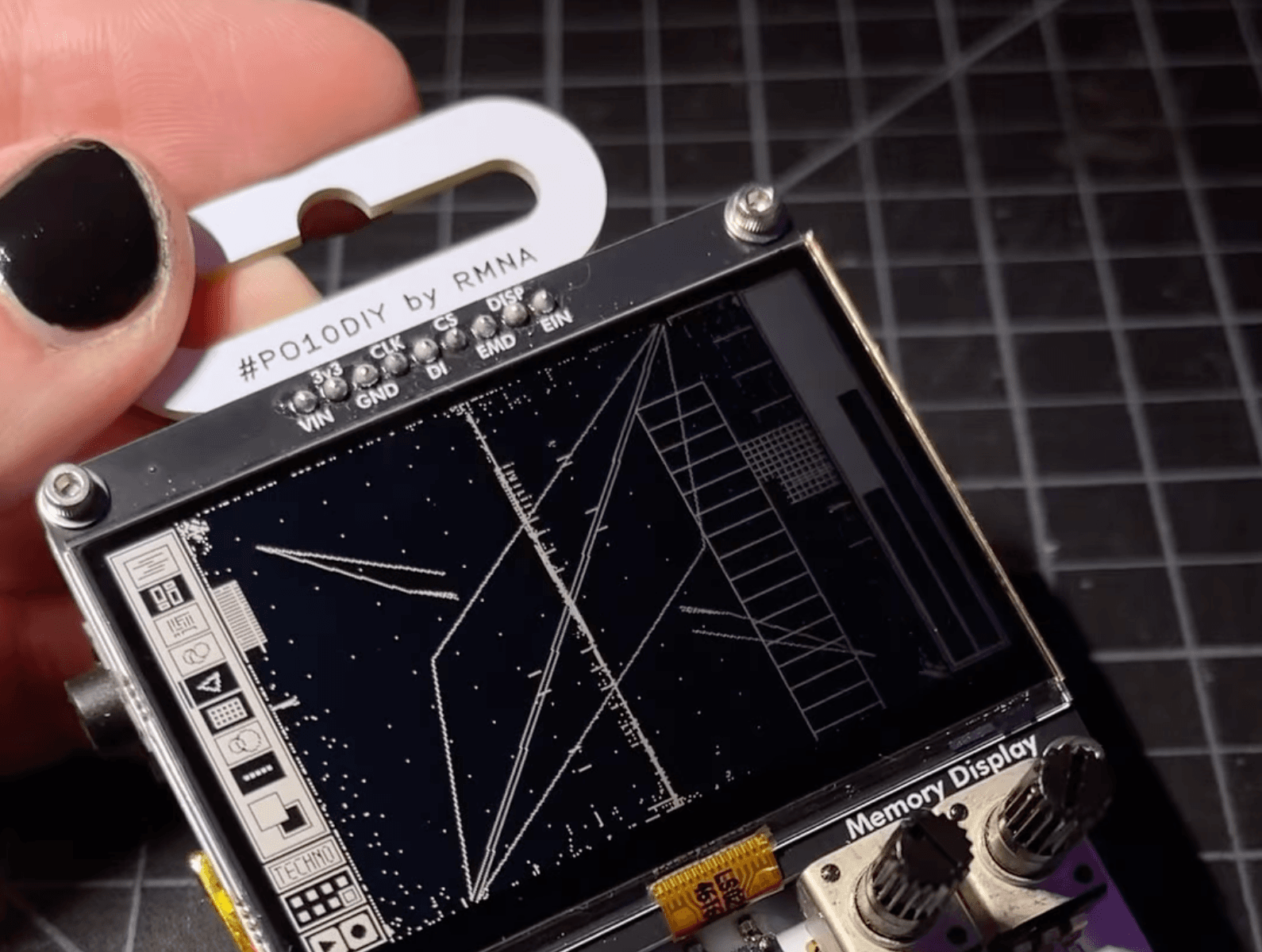
Ramona’s PO‑Video concept
RMNA’s build keeps the bare‑board charm but swaps the usual LCD for a 2.7‑inch Sharp Memory Display and a Raspberry Pi RP2040 brain. The result is a self‑contained graphics engine that can mirror its monochrome output over mini‑HDMI, turning any projector or studio monitor into a pocket‑operator‑driven visuals rig.
On the tiny board
Key parts stay admirably off‑the‑shelf:
- Adafruit Feather RP2040 with DVI
- 400 × 240 Sharp Memory Display
- 13 NeoPixel Nano status LEDs
- Two 10 kΩ pots for hands‑on control
- 18 tactile switches in the classic PO grid
Total BOM lands just under $100, with the display accounting for nearly half of that figure.

Two screens one frame buffer
A single 320 × 240 frame buffer feeds both the memory LCD and the HDMI port. Because the LCD refreshes at only ~20 fps, RMNA draws incrementally instead of wiping each frame, letting layers accumulate “MacPaint‑style” artifacts that give the visuals an organic flicker.
Cyclical macros tame the knobs
Borrowing a trick from Teenage Engineering’s own sound engines, each knob sweeps multiple parameters at different rates. The custom “cyclical macro” mapping puts nearly every combination of size, position and motion somewhere on the 0‑to‑1023 travel, so sweet spots appear regularly instead of hiding at the extremes.
Sync ready for pocket jams
Two TRS jacks pass audio while sampling the PO sync pulse, meaning the PO‑Video can sit at the end of a typical operator daisy‑chain and lock its eight‑step animation sequencer to whatever groove is playing. RMNA’s decision to drop one row of buttons keeps the silhouette intact while acknowledging that visuals can do a lot in half a bar.

Open source plans and next steps
RMNA is cleaning up the code and KiCad files with an eye toward an open release. Top of the post‑mortem list: a second‑revision PCB that fixes a reversed power switch, restores the full LED chain and experiments with bit‑banged LED control so the DVI port no longer hogs the RP2040’s PIO lanes.
A playful homage that fits the brief
The PO‑Video may not have cracked the official winners list, but it embodies the contest’s spirit: whimsical, hackable and portable. For visual artists who already carry a Pocket Operator in their gig bag, RMNA’s build hints at a future where beat and bitmap travel in the same pocket.