

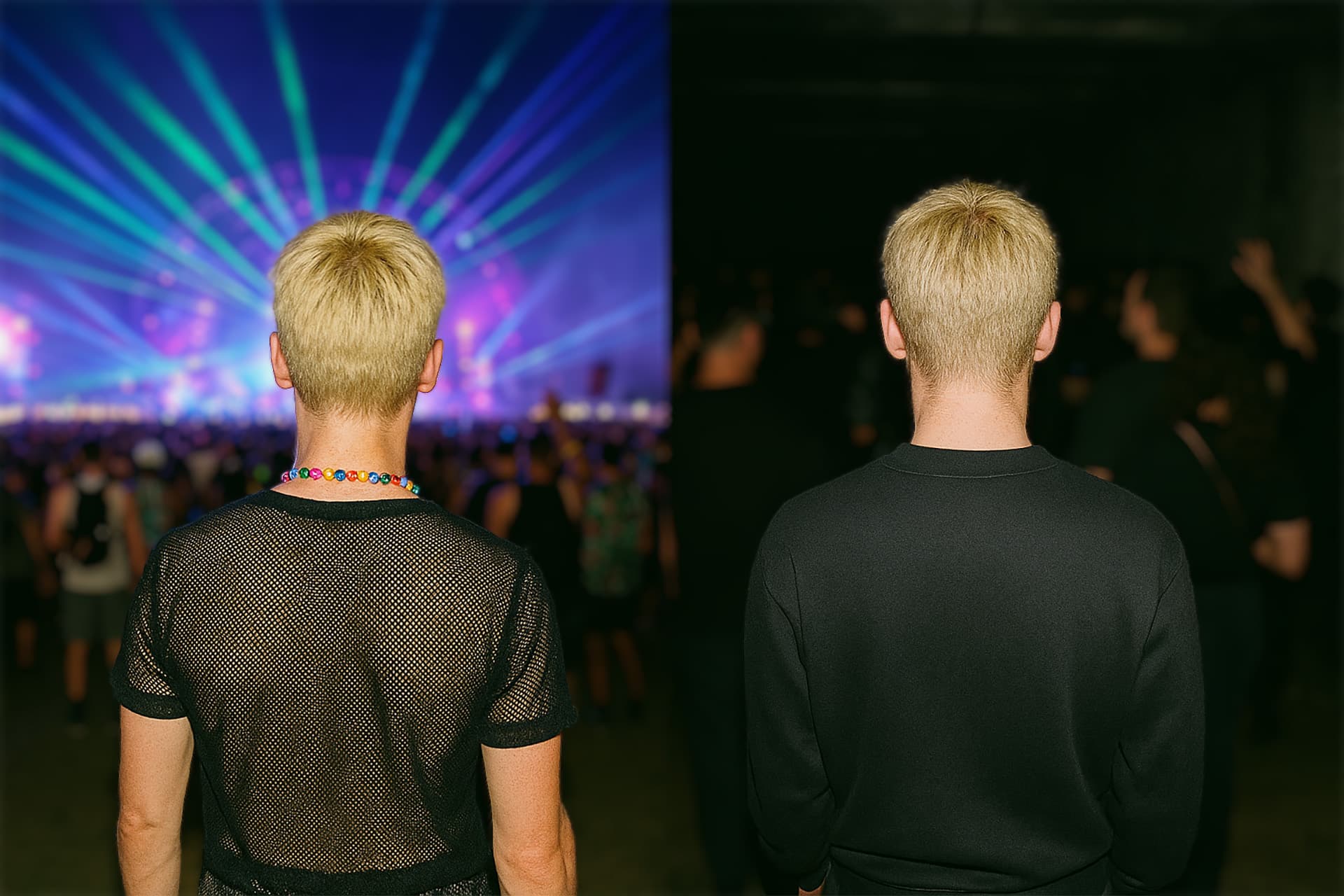
EDM’s rising prominence at Coachella
Electronic dance music (EDM) now undeniably dominates Coachella. In 2025, nearly 40% of the festival’s performances fell under the EDM umbrella, marking a clear shift from its rock and indie origins. With dedicated electronic stages like Sahara, Yuma, and the recently added Quasar, EDM acts ranging from techno legends Kraftwerk and The Prodigy to chart-toppers Zedd and Alok have been prominently featured.
The festival’s EDM presence has steadily increased, from approximately 37% in 2023 to 39% in 2025. Illustrating an industry-wide trend mirrored by festivals like Bonnaroo and Outside Lands. Clearly, EDM is now a mainstream pillar at major festivals, drawing huge audiences and significant media attention.
Is the festival boom hurting smaller venues?

Yet, while EDM thrives in festival settings, smaller venues and clubs (once the backbone of electronic music culture) struggle. Rising costs, particularly in cities like Los Angeles, have forced many clubs to close or shift away from underground acts. Real estate spikes, inflated production expenses, and soaring DJ fees have pushed niche events out of traditional spaces. Some critics argue that the commercial spectacle of EDM festivals directly contributes to these challenges, draining audiences and resources away from smaller, community-oriented clubs and venues.
Mainstream EDM’s focus on "superstar DJs" and high-budget productions can overshadow the artistry and communal ethos that smaller clubs historically championed. With fewer venues willing or able to host underground music, artists and promoters face limited options, stifling opportunities for creative experimentation and cultural growth.
Underground culture adapts through DIY resilience
Despite (or perhaps because of) these pressures, underground electronic music culture has experienced a resurgence, notably through DIY events hosted in unconventional venues. Los Angeles promoters like 6AM Group, Dirty Epic, Synthetik Minds, and OBSERVE have turned increasingly to warehouse parties, industrial spaces, and other non-traditional venues, reclaiming the independent, community-focused spirit of dance music’s roots.
The return to warehouses isn't just about economics, it's a conscious choice reflecting the community’s values. By creating events that prioritize music and authenticity over commercialization, these collectives cultivate intimate, inclusive atmospheres starkly contrasting with festival extravaganzas. Their ethos emphasizes high-quality sound systems, minimal spectacle, and genuine connection over VIP experiences or Instagram-friendly visuals.
Does mainstream EDM help or harm the underground?

The rise of EDM at events like Coachella poses complex questions for underground scenes. On one hand, mainstream festivals serve as gateways, introducing new listeners to electronic music who might later seek out deeper, more niche experiences. Exposure to a broad audience can indirectly support the underground by fueling interest and sustaining overall genre health.
Conversely, the festival model risks commodifying electronic music culture, emphasizing profit and spectacle over musical depth and community. High festival costs can set unrealistic financial expectations, ultimately squeezing smaller promoters. Furthermore, the spotlight on superstar DJs can distort perceptions about electronic music’s essence, sidelining less commercial artists and genres.
However, underground collectives increasingly collaborate to counteract these effects. Events like COMPOUND, organized jointly by several Los Angeles crews, demonstrate that unity and cooperation can sustain a vibrant alternative culture despite external pressures. These collaborations lower individual financial risks, foster a collective ethos, and uphold underground authenticity.
Finding balance through coexistence and symbiosis
The relationship between mainstream festivals and underground scenes doesn't need to be adversarial. Instead, a symbiotic relationship can emerge where mainstream visibility benefits the broader electronic music ecosystem, while underground scenes preserve the culture's integrity and creativity. The underground serves as a cultural anchor, continuously challenging mainstream trends and preventing EDM from becoming overly homogenized or superficial.
Ultimately, the EDM explosion at Coachella isn't solely a problem or a boon. It’s a reflection of electronic music's complex, evolving landscape. The underground thrives not despite the mainstream, but in dialogue with it, offering depth, experimentation, and authenticity that big festivals can rarely replicate. If major festivals continue to engage and inspire audiences, and underground scenes maintain their resilience and creative independence, electronic music culture as a whole stands to benefit.
Sources
- ROSTR Group Coachella analysis (2025, 2024)
- Dancing Astronaut – Techno Tuesday interviews (6AM Group, Synthetik Minds)
- Mixmag coverage of LA underground
- Resident Advisor commentary on festival trends
- Richie Hawtin "From Our Minds" warehouse tour statement
- Dirty Epic community interviews
- 6AM Group’s event descriptions and announcements