Digitakt II proves track-ready as EZBOT explores its stock library
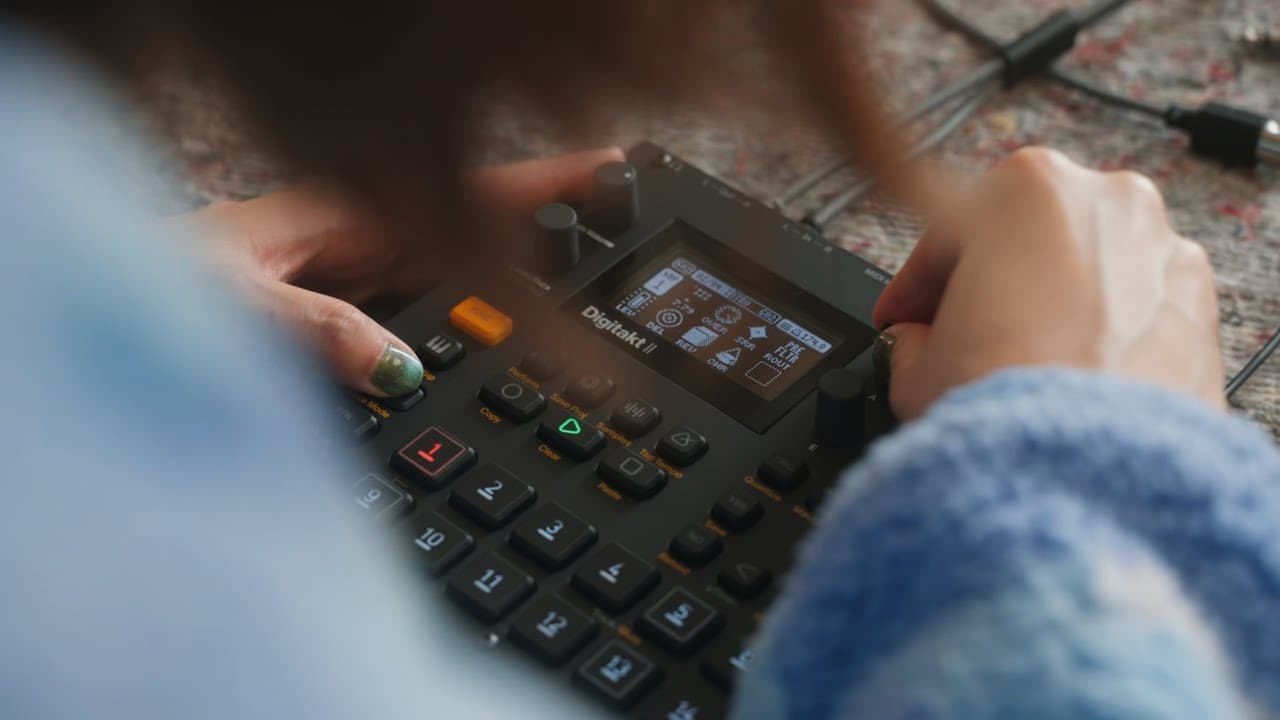
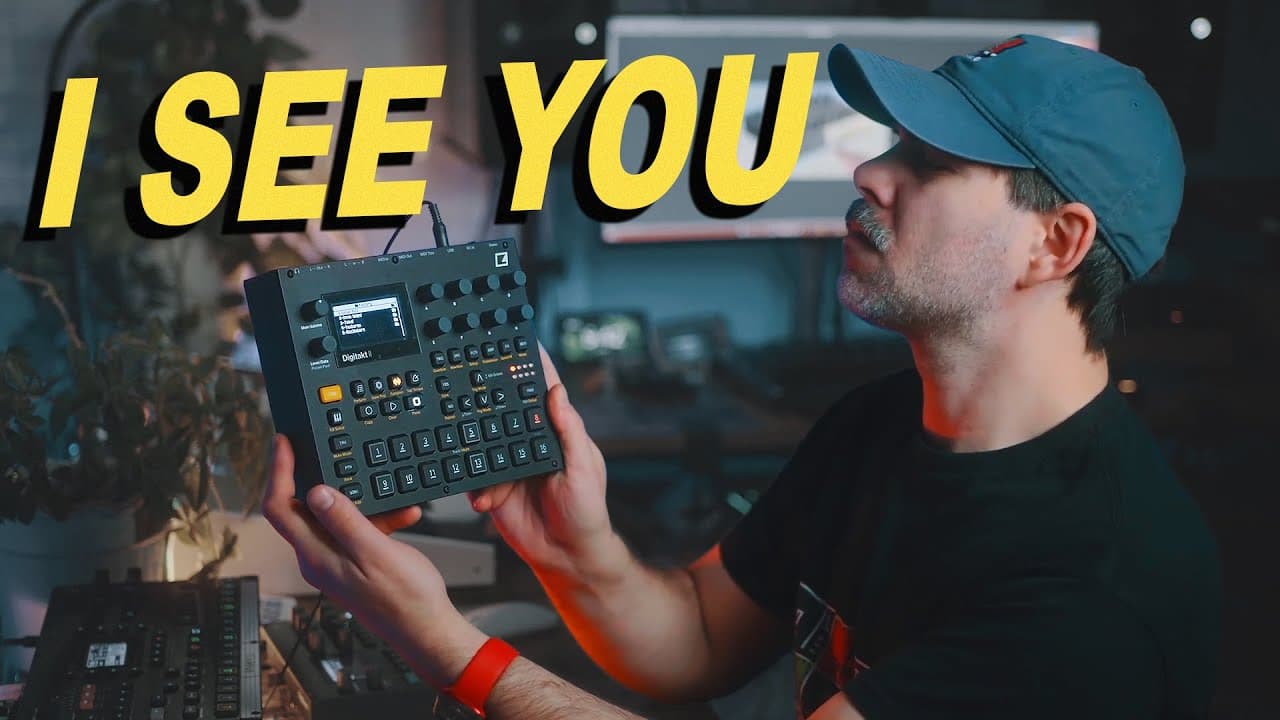
EZBOT (Matthew Piecora) opens his session with a self‑imposed rule: “today we’re going to make a track from scratch using the factory sounds on the Digitakt II". For producers who often rely on external sound sources, the challenge is immediately relatable. EZBOT frames the exercise as a “real test of my patience to do factory samples only,” setting the tone for a deep dive into what the sampler offers straight out of the box.
Kicks, tape noise and a crackly foundation
EZBOT begins by auditioning stock kicks, settling on a “class kick” and a softer “puff kick” to create subtle contrast in the low end. To keep the arrangement grounded in dub‑techno texture, he layers a tape‑noise sample, drenched in reverb and kept “extremely quiet,” as a continuous bed beneath the groove. The move shows how factory sounds can supply both rhythmic punch and atmosphere without external gear.
Chords sculpted with internal filters
Scrolling through the preset library, EZBOT is surprised to find clean chord samples “with no filtering on it,” a detail he celebrates because “we get to choose and use a Digitakt filter on it". By reaching for the second filter to shave off high‑end content, he demonstrates how the machine’s dual‑filter architecture can reshape otherwise vanilla samples into classic dub‑techno stabs.
Percussive layers and comb‑filter tricks
Minimalism does not mean sparseness in EZBOT’s hands. “We have 16 tracks, so if we just use small sounds that are delicate dancing in the background we can actually use up all our tracks and it won’t sound like a big mud pie,” he advises. Single‑cycle waveforms become bass lines, rim shots add wooden thump, and a comb‑filtered noise track provides gritty movement, prompting the off‑the‑cuff praise, “comb filters are so cool".
Arrangement builds with swing and ducking
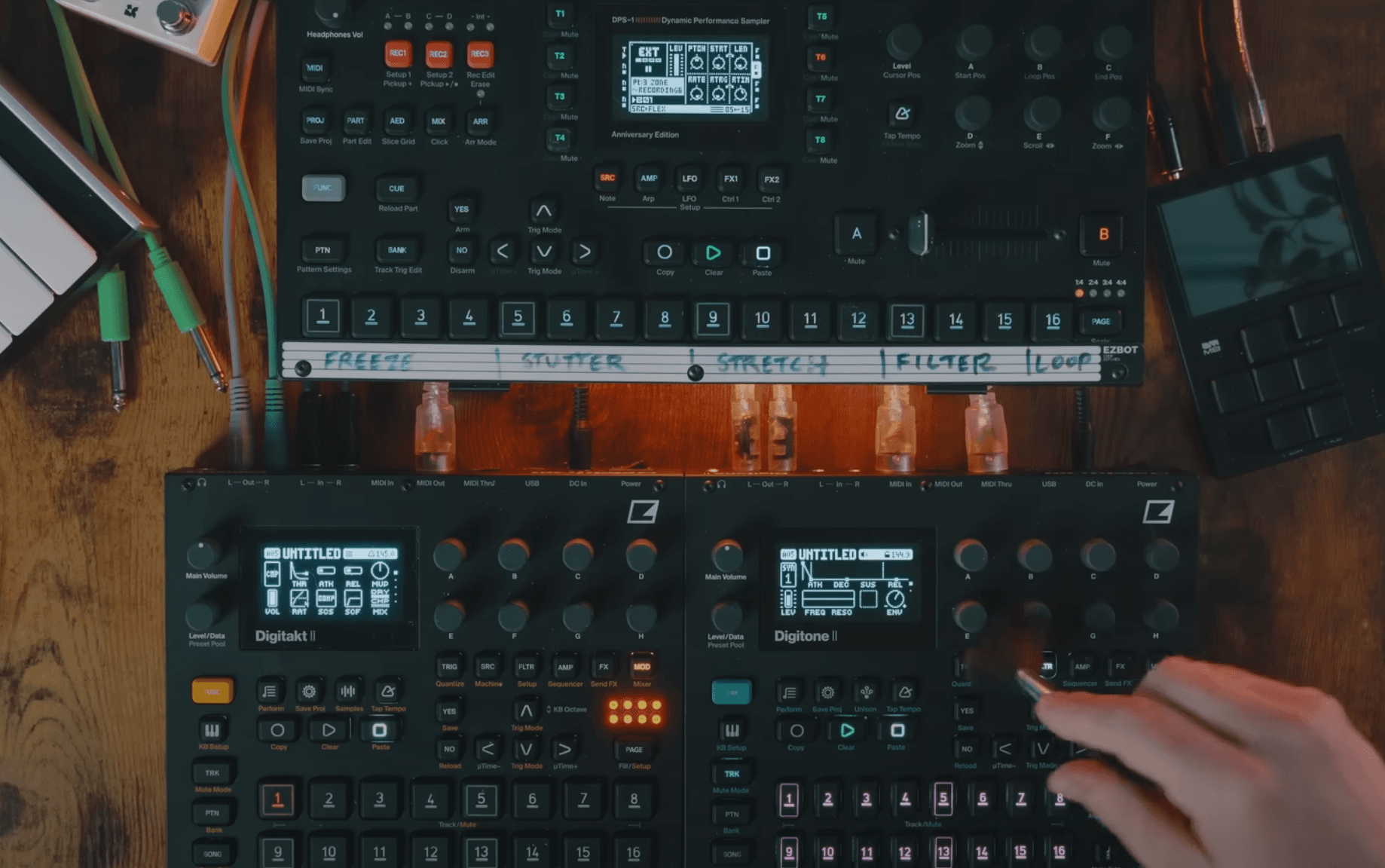
Throughout the jam EZBOT leans on swing settings, volume automation and LFO‑based ducking to keep energy evolving. A drum‑loop slice runs through grid time‑stretching, while triplet bass variations inject tension before each eight‑bar turnaround. The workflow remains entirely inside the Digitakt II, underscoring the sampler’s capacity for full‑track development without external help.
Take stock of the stock library
EZBOT’s test shows that the Digitakt II factory library (paired with 16 tracks, dual filters and flexible modulation) can carry a minimal or dub‑techno production from start to finish. For producers looking to write on the move or push themselves creatively, his verdict is clear: the stock sounds are not just placeholders but a viable palette ready for serious studio work.