A builder shaped by curiosity and contradictions
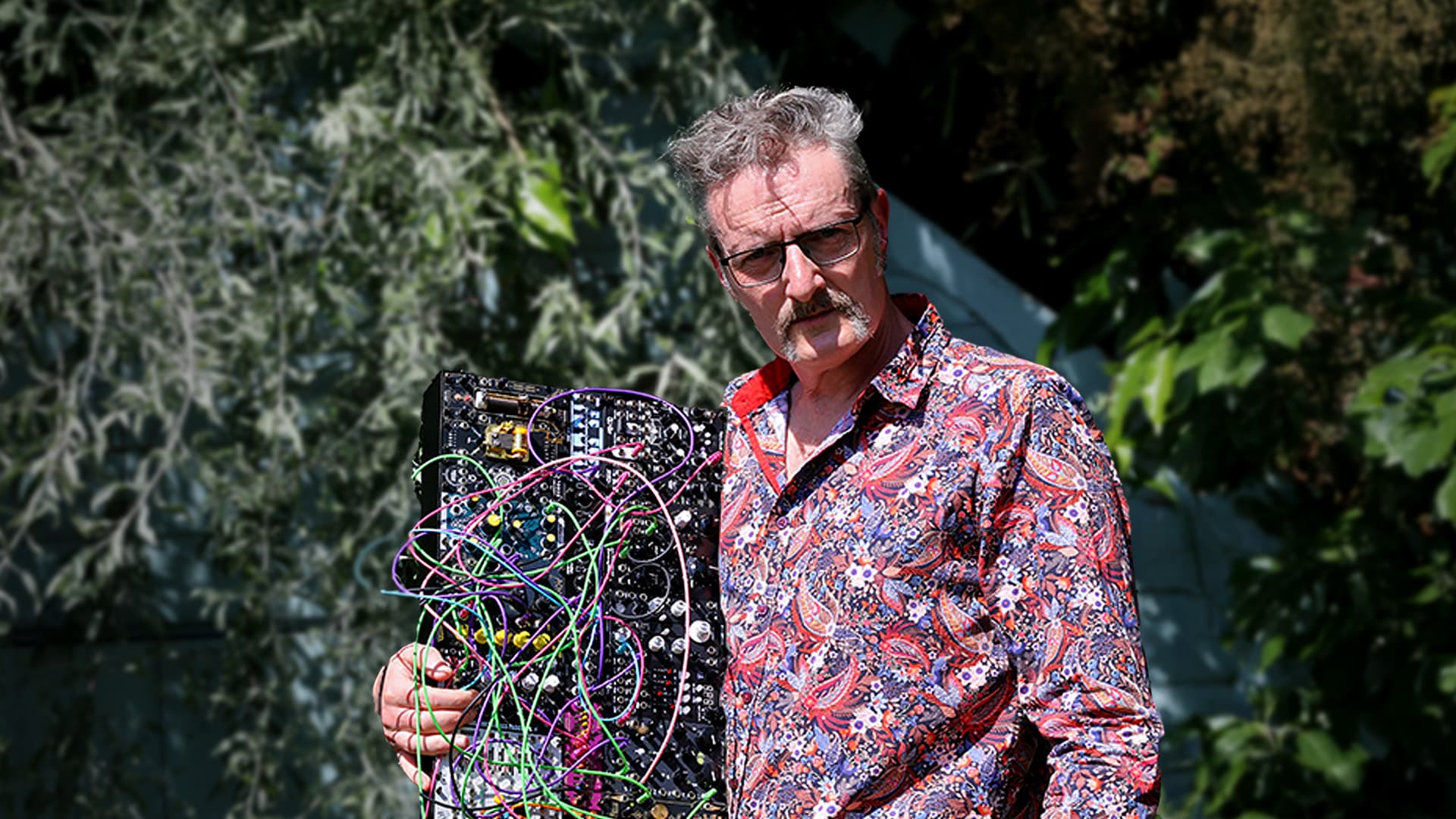
In this episode of North², host Korey Luna speaks with Robin Vincent, the mind behind Molten Music Technology. Known for his detailed YouTube reviews and hands-on explorations of modular gear, Robin is equally a designer, educator, and performer, someone who brings together deep technical knowledge with an infectious willingness to figure things out in real time. Whether he's building a flute from scratch or designing a Eurorack module to solve a personal workflow issue, Robin’s approach to music and technology is shaped by experimentation over polish.
From early tape deck multi-tracking to a university course that had him building Baroque recorders and pitch-to-MIDI converters, Robin’s background is as eclectic as it is practical. His broad education gave him a comfort with woodwork, electronics, and acoustics, disciplines that continue to inform his work today. “I’ve become a very broad-thinking person,” he says. “That’s been one of the most important things in my journey.”
Designing from need, not novelty
Robin’s entry into module design came not from a desire to launch a product line, but from moments of frustration, like wishing he could see modulation more clearly in his rack, or toggle effects on and off without digging through menus. That desire for clarity led to the creation of the Motion Meter, a utility module built in collaboration with Befaco that visualizes control voltages through an LED halo, and the Bypass, a simple solution to a long-missing function.
He describes the process of working with Befaco as open and conversational, shaped by mutual respect and realistic expectations. “You want to pile in as many features as you can think of,” he says, laughing. “But you have to stop, or no one will understand it.” For Robin, usefulness always comes before complexity, and design is less about invention than refinement.
Live music as practice, not product
Robin performs regularly at electronic open mic nights like EMOM, but he doesn’t romanticize the idea of live perfection. In fact, he’s quick to admit that his performances are often shaped by whatever modules happen to be in his rack that week. With new gear constantly rotating through his studio for review, the idea of a stable live setup feels like a luxury. “It’s lazy, maybe, but also improvisational,” he says. “I like the risk involved.”
Improvisation, for Robin, isn’t just about spontaneity, it’s a kind of resistance. In a music landscape that often prioritizes pre-programmed perfection, his sets offer a different perspective: slow builds, subtle changes, and the courage to not rush. “Trying to resist dropping everything in too quick,” he explains, “is something you have to practice too.”
A relationship with sound, not genre
Despite decades of experience with synthesis, Robin doesn’t tie himself to any particular genre. “I can’t name electronic music genres,” he admits. “But I can talk about music in a wide range of ideas.” That openness allows him to navigate the spaces between disciplines, between building and listening, performing and observing. His musical instincts were shaped more by sci-fi soundtracks and Vangelis LPs than club culture, and that continues to inform his aesthetic: emotive, spacious, and sometimes delightfully odd.
He’s also ventured into virtual instruments, creating custom sample-based synths using Decent Sampler, not as commercial products, but as gifts to his Patreon community. These are often built from his own recordings of analog gear, offering polyphonic versions of otherwise monophonic synth voices. “It’s labor intensive,” he admits, “but it’s a nice way to share what I love.”
A grounded vision for community and creativity
Despite his depth of knowledge, Robin remains grounded, warm, and collaborative. He co-organizes Synth East, an annual synth community event in East Anglia that gives people the chance to try gear, meet makers, and perform. “There’s no shop around here anymore,” he says. “These events are increasingly vital.” More than trade shows, they’re spaces for connection, participation, and celebration, ideas at the heart of Robin’s ethos.
As the episode closes, what stands out most is not Robin’s technical expertise, but his mindset: one of constant curiosity, of thoughtful restraint, of making tools that help others create more freely. Whether he’s building a module, jamming live, or sampling a drum machine for fun, Robin invites us not to perfect our process, but to remain in conversation with it.