Introducing dialectical sequencing
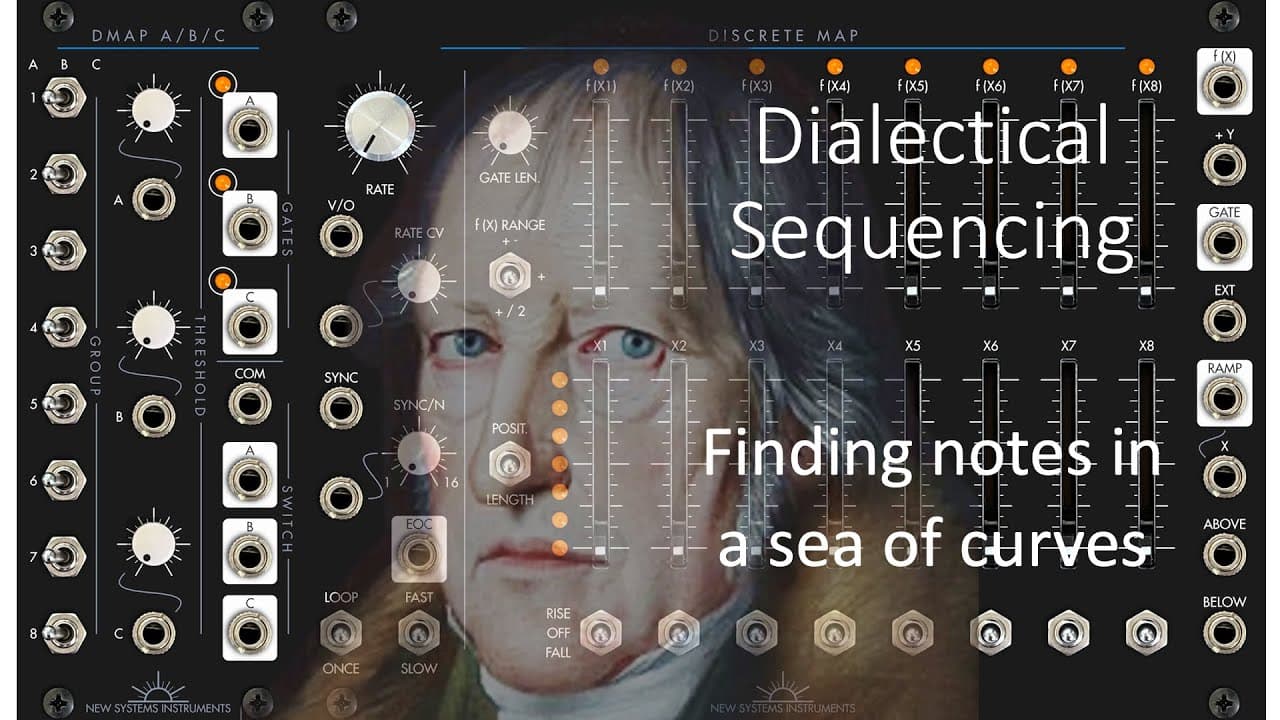
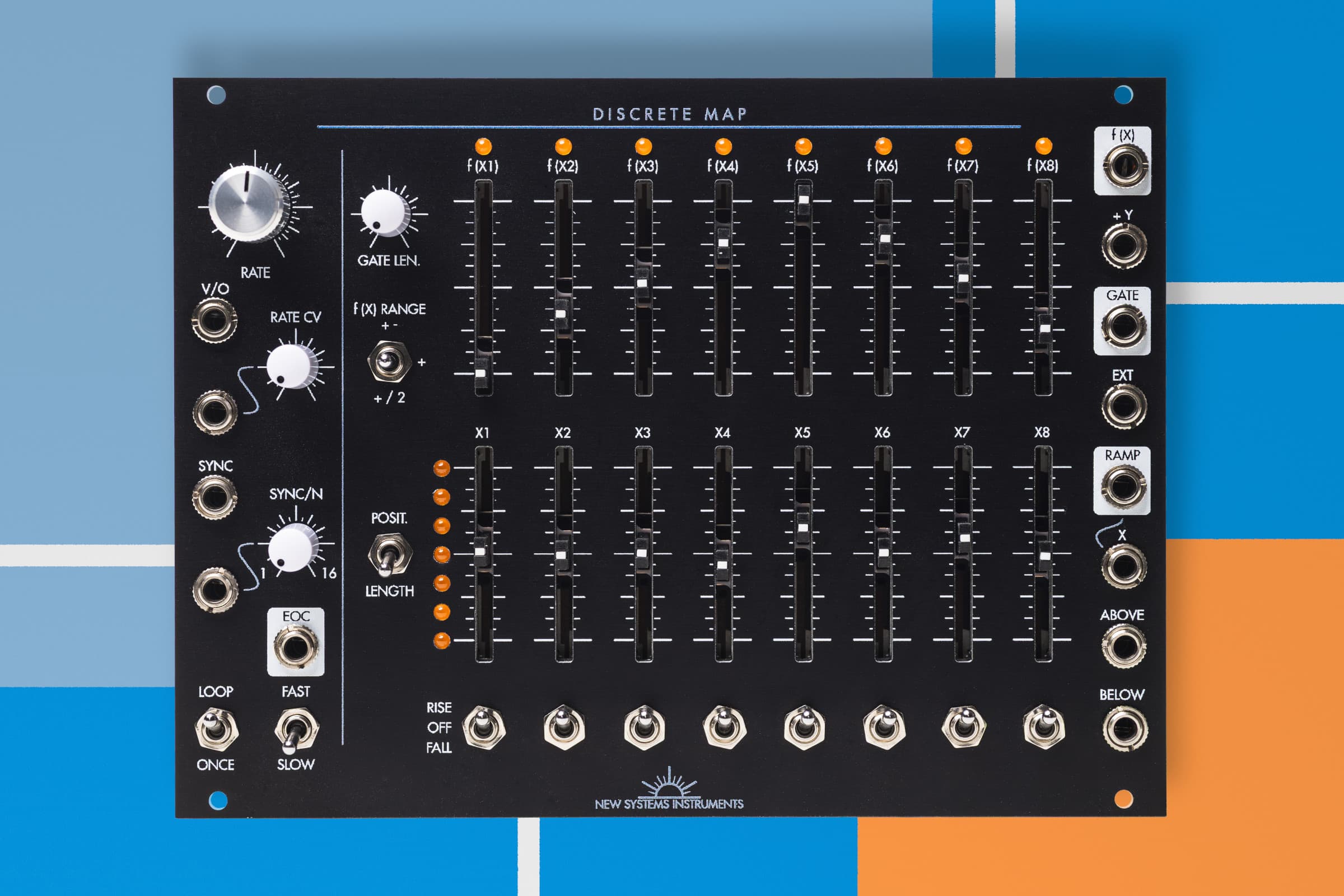
Evan from New Systems Instruments recently presented a talk on dialectical sequencing at Gray Area's Creative Resource Library. This is a type of sequencing where musical sequences emerge naturally from interactions within sound production rather than from predefined scores or rigid structures. This concept notably underpins New Systems Instruments' latest Eurorack module, Discrete Map, designed specifically for this form of sequencing.
From hierarchical to dialectical
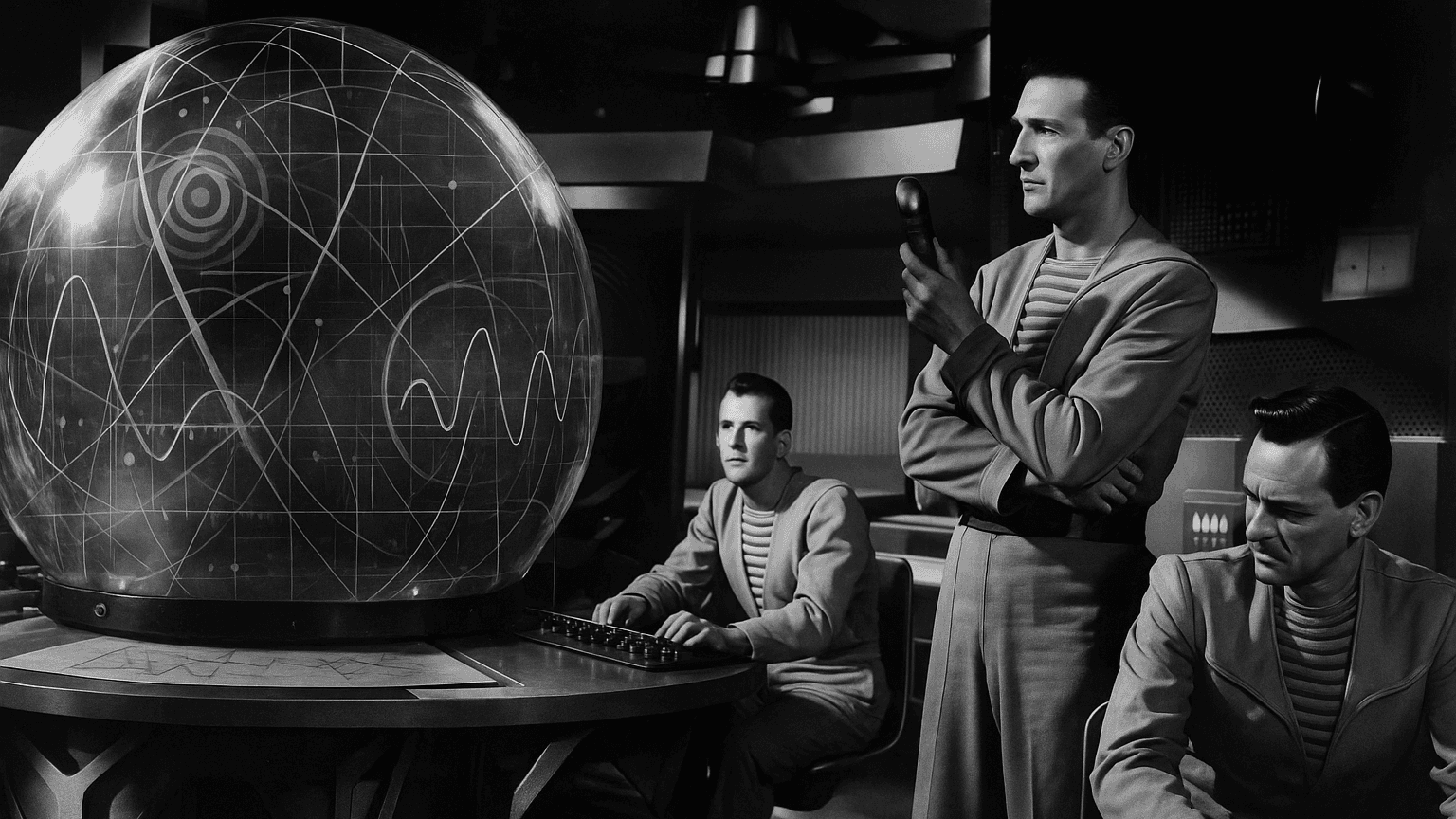
In traditional music sequencing, a composer first creates a structured score that musicians interpret into sound. Evan contrasts this hierarchical approach with dialectical sequencing, where notes organically arise as part of the sonic environment itself. The dialectical method decentralizes composition, integrating note generation within sound creation processes, and leverages modules like envelope followers and oscillators to organically produce sequences.
Quantity and quality
Evan's talk draws inspiration from philosopher GWF Hegel, focusing on the transformation between quantitative and qualitative states within music. Quantitative aspects, such as smoothly varying voltages, transition into qualitative changes (distinct notes or rhythmic patterns) through modules like quantizers or sample-and-hold circuits. This shift exemplifies the core of dialectical sequencing, blending seamless modulation with defined musical events.
Historical perspectives
The historical context enriches the dialectical sequencing concept. Evan referenced cybernetics, the work of Louis and Bebe Barron, and early experiments by electronic music pioneer Todd Barton, notably his famous Krell Muzak patch. These historical examples illustrate how electronic musicians have long explored feedback and randomness as compositional tools, paralleling dialectical sequencing's principles.
Discrete Map's unique approach
The Discrete Map Eurorack module embodies these dialectical principles by converting smoothly changing signals (quantitative) into defined musical steps (qualitative). Evan explained how this module integrates naturally occurring sonic thresholds to trigger events, creating sequences inherently tied to the soundscape's dynamics. Our previous article details the module's release and technical specifications, highlighting its innovative design.
Practical patches demonstrated
Evan showcased several practical patch examples demonstrating dialectical sequencing's versatility. A basic patch example involved complex LFO modulation directly creating sequences, while more advanced patches explored natural quantization through resonant filters and beat frequency-driven envelope followers. These practical examples clearly illustrated dialectical sequencing’s expressive potential in modular synthesis.
Expanding musical possibilities
Dialectical sequencing encourages musicians to rethink the compositional process, focusing on interaction and feedback within sound generation systems. Evan highlighted how this method naturally extends into software environments like DAWs or Max/MSP patches, broadening the application beyond modular hardware. The approach promises new possibilities for electronic musicians seeking to blend composition and performance seamlessly.